Your Dog Is Getting Older — Now What?
One day you notice your dog takes a little longer to get up from their bed. They sleep more, play less, and maybe the scale is creeping up even though you haven't changed their food.
This is normal aging — but it requires proactive nutrition adjustments. The right diet can add quality years to your dog's life. The wrong diet can accelerate decline.
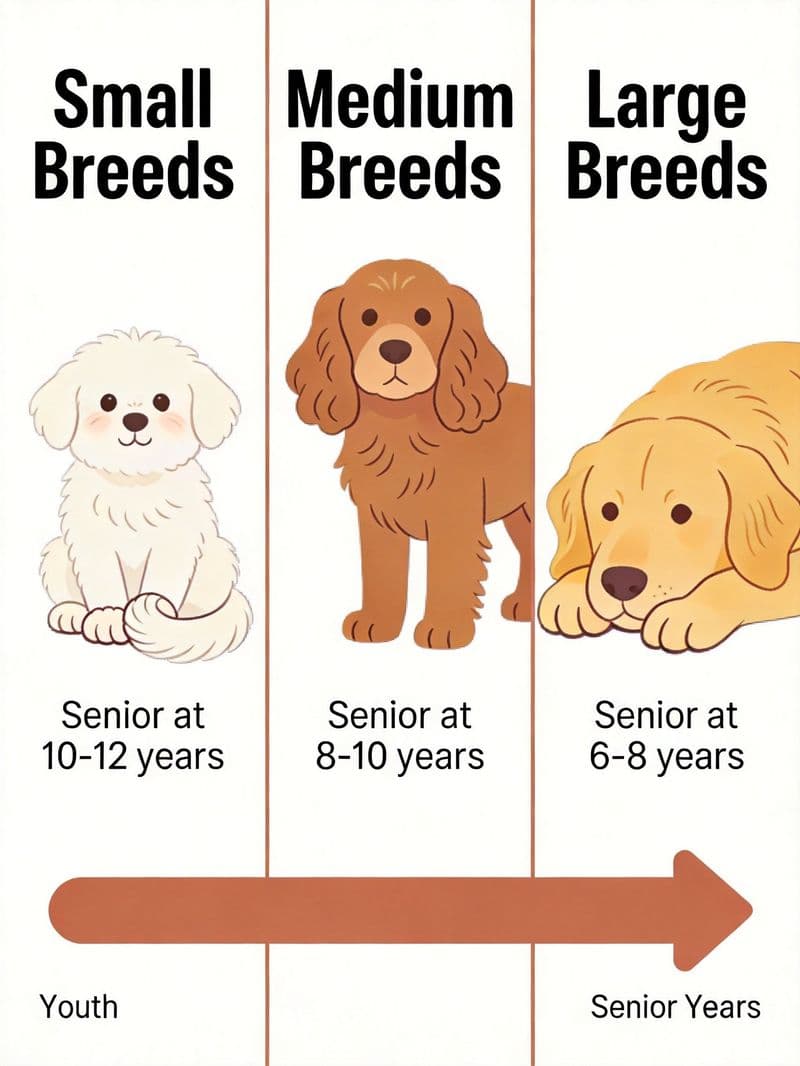
When Does a Dog Become "Senior"?
There's no single answer — it depends on breed size:
| Breed Size | Senior Age | Average Lifespan |
|---|---|---|
| Toy (under 5 kg) | 10–12 years | 14–18 years |
| Small (5–10 kg) | 10–12 years | 12–15 years |
| Medium (10–25 kg) | 8–10 years | 10–13 years |
| Large (25–45 kg) | 6–8 years | 8–12 years |
| Giant (over 45 kg) | 5–6 years | 6–9 years |
Key point: A 7-year-old Great Dane is geriatric. A 7-year-old Chihuahua is middle-aged. Don't apply a single age threshold across all breeds.
What Changes in Senior Dogs
Understanding these changes is the foundation for nutritional adjustments:
Metabolism slows. Basal metabolic rate decreases by 20–30% in senior dogs. They simply need fewer calories, even if their activity level hasn't changed much.
Muscle mass decreases. Sarcopenia (age-related muscle loss) begins around age 7–8 in most dogs. Less muscle means lower calorie needs and less support for joints.
Digestion becomes less efficient. Nutrient absorption decreases, particularly for protein, fat, and certain vitamins. Food may need to be more digestible.
Dental issues develop. Tartar buildup, gum disease, and tooth loss can make dry kibble difficult to eat.
Organ function declines. Kidney function naturally decreases with age, which affects protein metabolism and hydration.
Calorie Adjustments for Senior Dogs
The most common mistake with senior dogs is not reducing calories as metabolism slows. This leads to gradual weight gain, which compounds every other age-related issue.
How Much to Reduce
| Activity Level | Calorie Adjustment from Adult |
|---|---|
| Still active | Reduce by 10–15% |
| Moderately active | Reduce by 20–25% |
| Mostly sedentary | Reduce by 25–30% |
Example: A 25 kg adult Labrador eating 1,100 kcal/day would need approximately 825–935 kcal/day as a moderately active senior.
Calculate your senior dog's exact calorie needs →
Why Weight Gain Is Extra Dangerous in Seniors
Extra weight on an older dog isn't just an inconvenience — it's a cascade:
- More weight → more joint stress → less movement → more weight gain
- More fat → more inflammation → faster organ aging
- Less movement → muscle loss → weaker support for aging joints
- Fat tissue produces inflammatory hormones that accelerate cognitive decline
This is why maintaining ideal weight is arguably the most important thing you can do for a senior dog. Check your dog's Body Condition Score regularly.
Protein: The Counterintuitive Senior Nutrient
There's a persistent myth that senior dogs should eat low-protein diets. This is wrong for most seniors and potentially harmful.
For healthy senior dogs: Protein needs actually INCREASE by approximately 25% compared to younger adults. This is to combat sarcopenia and maintain muscle mass. Aim for diets with 25–30% protein on a dry-matter basis.
For dogs with kidney disease: This is where protein restriction applies — but only under veterinary guidance. Reducing protein without medical justification does more harm than good.
The bottom line: Don't automatically reduce protein because your dog is older. Get blood work done first to assess kidney function, then adjust accordingly.
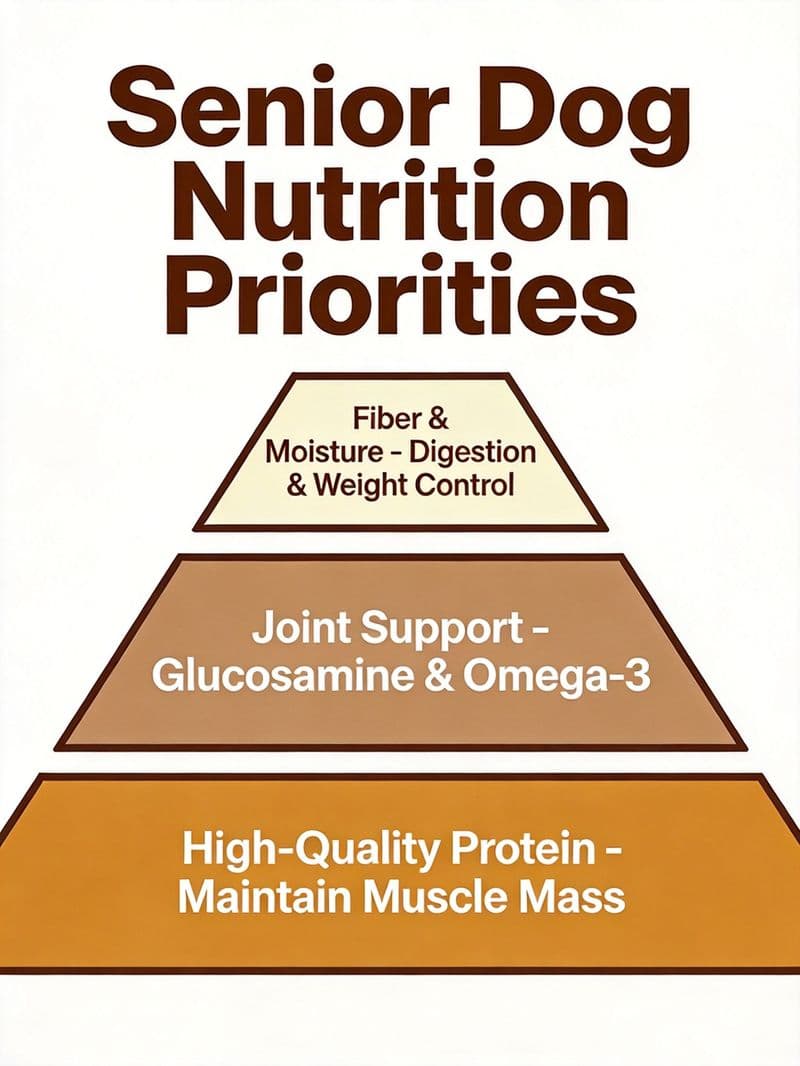
Joint Support Nutrition
Joint problems are the most common health issue in senior dogs. While nutrition can't cure arthritis, it can slow progression and improve comfort:
Omega-3 fatty acids (EPA/DHA): The most evidence-supported supplement for joint health. Fish oil at 75–100 mg per kg of body weight per day can reduce inflammation and improve mobility. Look for a minimum of 300 mg EPA + DHA combined per serving.
Glucosamine and chondroitin: Mixed evidence, but widely recommended. May be more effective as a preventative than a treatment. Best combined with omega-3s.
Weight management: The single most effective intervention for joint health. Every extra kilogram adds approximately 4 kg of stress to the knees. Losing weight provides more relief than any supplement.
Common Senior Health Conditions and Diet
| Condition | Dietary Adjustment |
|---|---|
| Obesity | Reduce calories by 25%, increase fiber, add water to food |
| Kidney disease | Moderate protein restriction, phosphorus restriction, omega-3 supplementation |
| Cognitive dysfunction | Antioxidant-rich foods, medium-chain triglycerides (MCT oil) |
| Diabetes | High protein, low carbohydrate, consistent meal timing |
| Heart disease | Sodium restriction, omega-3 supplementation, taurine supplementation |
| Dental disease | Softer food, smaller kibble, or wet food; dental chews |
Important: Never make significant dietary changes without consulting your veterinarian. Many of these conditions have overlapping symptoms, and the wrong dietary change can make things worse.
Hydration: The Hidden Senior Issue
Senior dogs have a reduced sense of thirst and are at higher risk for dehydration. This is especially dangerous for dogs with kidney disease.
Tips:
- Always have fresh water available in multiple locations
- Add water to dry food (1/4 to 1/2 cup per meal)
- Consider a pet water fountain — running water encourages drinking
- Monitor water intake: a dog should drink approximately 50–60 ml per kg of body weight per day
When to See the Vet About Diet Changes
Schedule a veterinary checkup if you notice:
- Weight change of more than 5% in a month (up or down)
- Decreased appetite lasting more than 2 days
- Increased thirst and urination
- Difficulty chewing or swallowing
- Vomiting or diarrhea after eating
- Reluctance to eat hard food
Annual blood work is essential for senior dogs — it catches kidney disease, diabetes, and other conditions early, when dietary adjustments are most effective.
Practical Tips for Feeding Senior Dogs
- Switch to 2–3 smaller meals instead of one large meal if digestion seems slower
- Warm food slightly to enhance aroma if appetite is decreasing
- Soften kibble with warm water if dental issues make chewing difficult
- Measure everything — use our calorie calculator and a kitchen scale
- Check BCS monthly — weight changes happen fast in seniors
- Keep a feeding log — share it with your vet at checkups
Next Steps
- Check your dog's Body Condition Score — is weight management needed?
- Calculate senior calorie needs — adjusted for age and activity
- Get a personalized feeding plan — with exact portion sizes
- Browse breed-specific guides — ideal weight ranges for your dog's breed