← All Breeds
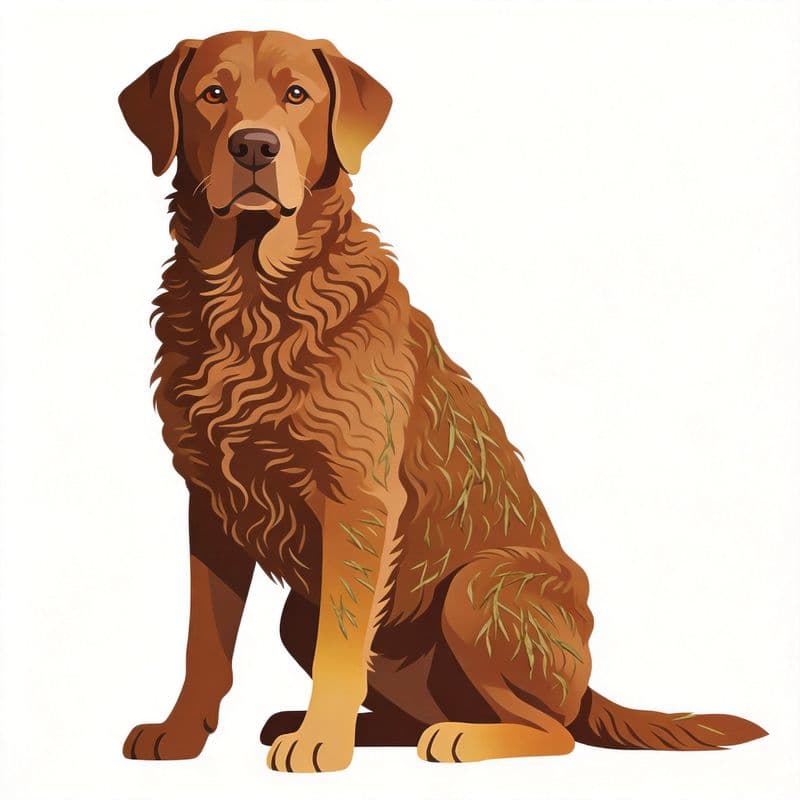
Chesapeake Bay Retriever

Chesapeake Bay Retriever Weight & Calorie Guide

Large Breed

Quick Answer

A healthy adult Chesapeake Bay Retriever weighs 2536 kg (55.179.4 lbs), according to the AKC breed standard. Puppies reach 50% of adult weight by 6–8 months and full weight by 14–18 months.

Source: AKC breed standard, WSAVA nutrition guidelines

Quick Facts

Ideal Weight
2536 kg
(55.179.4 lbs)
Size Category
large
Breed Type
Daily Calories
~14541817 kcal
Adult, neutered

Ideal Weight Range

25 kgto36 kg
55.1 lbsto79.4 lbs
UnderweightIdealOverweightObese
Data:AKC breed standard·WSAVA guidelines

Puppy Weight Predictor

For puppies under 12 months. Enter your puppy's current weight and age to predict adult weight.

Unit:

How the puppy weight predictor works

This predictor uses growth milestone data from Salt et al. (2017), published in Veterinary Record, which tracked the weight development of dogs across five size categories from birth to adulthood. By comparing your puppy's current weight against the expected growth percentage for their age and size category, we estimate their adult weight range.

Factors that affect adult weight

Genetics play the largest role, but nutrition, neutering status, and overall health also influence growth rate. Puppies fed excessive calories during rapid growth phases may exceed their genetic weight potential, while underfed puppies may not reach it. Large and giant breeds grow more slowly than toy and small breeds, reaching full size at 18–24 months rather than 10–12 months.

Data source: Salt et al. (2017) "Growth patterns of commercial kennel dogs" Veterinary Record • AKC breed standards

Chesapeake Bay Retriever Health & Weight Management

The Chesapeake Bay Retriever was developed in the 1800s to retrieve waterfowl from the icy, rough waters of the Chesapeake Bay. Strong, muscular, and built for endurance, Chessies weigh 55–80 lbs and carry a dense, oily double coat that repels cold water. Their deep chest makes them prone to bloat (GDV), and excess weight compounds this risk while accelerating hip and elbow dysplasia. Chessies are also susceptible to exercise-induced collapse (EIC), and carrying extra pounds makes recovery from intense work even harder on their joints.

Exercise: Chessies need 60–90 minutes of vigorous daily exercise — swimming, retrieving, long runs, and hiking. They are natural water dogs with extraordinary stamina. A Chessie without adequate exercise becomes frustrated, mouthy, and destructive. Structured activities like hunt tests and field work provide both physical and mental fulfillment.

Feeding tips: Measure meals precisely and feed twice daily using a large-breed formula. Avoid exercising right before or after meals to reduce bloat risk. Chessies are food-motivated and will scavenge — secure trash cans and limit treats to 10% of daily calories. Replace high-calorie biscuits with green beans or apple slices.

Keeping your Chessie at a healthy 55–80 lbs (25–36 kg) is critical for joint health and bloat prevention. Use PawScale's calorie calculator for Chesapeake Bay Retrievers to set exact daily limits, check body condition with our BCS assessment tool, and build a balanced meal plan with the feeding guide.

Data source: AKC breed standard • Last updated: 2026-08-19

Is your Chesapeake Bay Retriever at a healthy weight?

59% of dogs are overweight — can you tell? Take our free 2-minute Body Condition Score assessment.

Take BCS Assessment

Chesapeake Bay Retriever Calorie Calculator

Calculate daily calorie needs in 3 steps

Frequently Asked Questions

How much should a Chesapeake Bay Retriever weigh?

The ideal weight for a Chesapeake Bay Retriever is 2536 kg (55.179.4 lbs). Weight can vary based on gender, age, and individual build. Use our calorie calculator above to get personalized feeding recommendations.

How many calories does a Chesapeake Bay Retriever need per day?

A typical adult Chesapeake Bay Retriever weighing 31 kg needs approximately 14541817 kcal per day, depending on activity level and whether they are neutered. Use our breed-specific calculator above for an exact number based on your dog's details.

Is my Chesapeake Bay Retriever overweight?

59% of dogs are overweight, and most owners cannot tell just by looking. Check your Chesapeake Bay Retriever's Body Condition Score (BCS) — if you can't easily feel their ribs or they have no visible waist from above, they may be overweight. Take our free 2-minute BCS assessment above to find out.

When does a Chesapeake Bay Retriever reach full adult weight?

Chesapeake Bay Retriever puppies reach 50% of their adult weight by 6–8 months and typically reach full adult weight by 14–18 months, according to AKC growth guidelines. Small breeds mature faster than large breeds.

What size crate does a Chesapeake Bay Retriever need?

A Chesapeake Bay Retriever typically needs a 42-inch crate based on breed size. Use PawScale's free crate size calculator for a personalized recommendation.

References & data sources

1. AKC Official Breed Standard — Chesapeake Bay Retriever. akc.org

2. Salt C, et al. “Estimating the expected growth of dogs.” Vet Record, 2017;180(15):376.

3. National Research Council. Nutrient Requirements of Dogs and Cats. National Academies Press, 2006.

4. Laflamme DP. “Development and validation of a body condition score system for dogs.” Canine Practice, 1997;22(4):10–15.

5. WSAVA Global Nutrition Guidelines; Association for Pet Obesity Prevention (APOP) 9-point BCS scale.

Last reviewed: September 2026

Know Your Chesapeake Bay Retriever's Exact Calorie Needs

Calculate the perfect daily calories for your Chesapeake Bay Retriever based on their weight, age, and activity level. Prevent obesity with science-backed nutrition guidance.

Calculate Calories Now

Free · Breed-specific · Takes 30 seconds