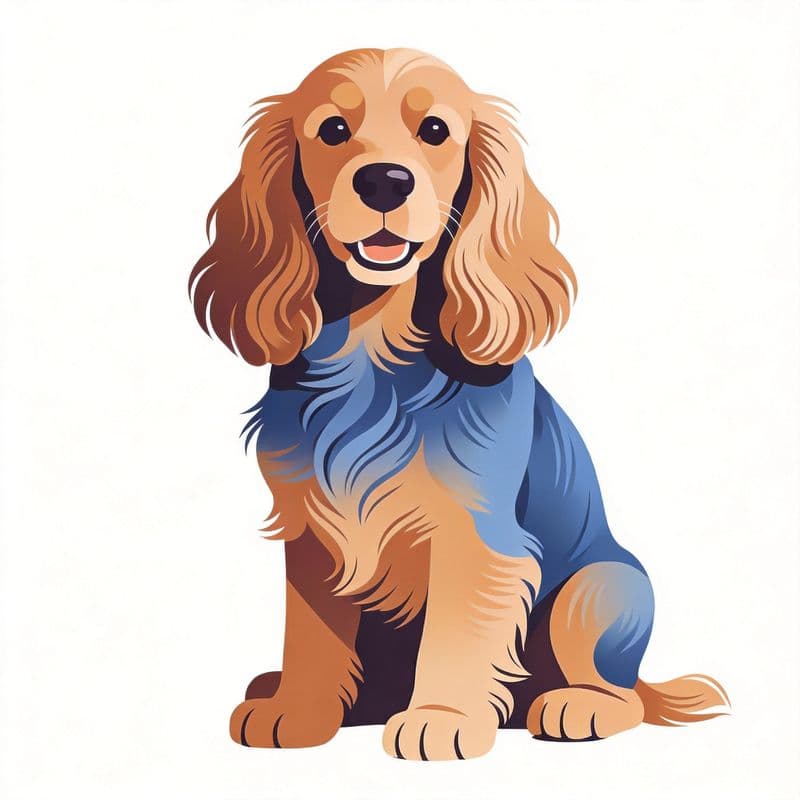
English Cocker Spaniel Weight & Calorie Guide
Quick Answer
A healthy adult English Cocker Spaniel weighs 12–16 kg (26.5–35.3 lbs), according to the AKC breed standard. Puppies reach 50% of adult weight by 4–5 months and full weight by 9–10 months.
Source: AKC breed standard, WSAVA nutrition guidelines
Quick Facts
Ideal Weight Range
Puppy Weight Predictor
For puppies under 12 months. Enter your puppy's current weight and age to predict adult weight.
How the puppy weight predictor works
This predictor uses growth milestone data from Salt et al. (2017), published in Veterinary Record, which tracked the weight development of dogs across five size categories from birth to adulthood. By comparing your puppy's current weight against the expected growth percentage for their age and size category, we estimate their adult weight range.
Factors that affect adult weight
Genetics play the largest role, but nutrition, neutering status, and overall health also influence growth rate. Puppies fed excessive calories during rapid growth phases may exceed their genetic weight potential, while underfed puppies may not reach it. Large and giant breeds grow more slowly than toy and small breeds, reaching full size at 18–24 months rather than 10–12 months.
Data source: Salt et al. (2017) "Growth patterns of commercial kennel dogs" Veterinary Record • AKC breed standards
English Cocker Spaniel Health & Weight Management
The English Cocker Spaniel is a compact, cheerful flushing spaniel originally bred to flush game from dense cover in the English countryside. Slightly larger than their American cousin at 26–35 lbs, they are sturdy and energetic with a silky, feathered coat. English Cockers are prone to ear infections due to their long, pendulous ears that trap moisture, and to hip dysplasia. Excess weight worsens joint stress and compounds ear problems in this active breed. They are also susceptible to familial nephropathy, and maintaining a lean body condition supports overall organ health.
Exercise: English Cockers need 45–60 minutes of daily exercise — brisk walks, field work, retrieving, and play. They are enthusiastic workers with surprisingly high endurance for their size. A Cocker without enough exercise becomes hyperactive and vocal. They love swimming and make excellent companions for hiking and agility at a moderate level.
Feeding tips: Feed two measured meals daily using a medium-breed or active-dog formula. Cockers are food-driven and will happily overeat. Check and clean ears after every meal — their long ears dangle into food and water bowls. Use a narrow, deep bowl to minimize ear dunking. Limit treats and use portions of daily kibble for training rewards.
Keeping your English Cocker Spaniel at a healthy 26–35 lbs (12–16 kg) supports joint and ear health. Use PawScale's calorie calculator for English Cocker Spaniels to set exact daily limits, check body condition with our BCS assessment tool, and build a balanced meal plan with the feeding guide.
Data source: AKC breed standard • Last updated: 2026-08-19
Is your English Cocker Spaniel at a healthy weight?
59% of dogs are overweight — can you tell? Take our free 2-minute Body Condition Score assessment.
English Cocker Spaniel Calorie Calculator
Calculate daily calorie needs in 3 steps
Frequently Asked Questions
How much should a English Cocker Spaniel weigh?
The ideal weight for a English Cocker Spaniel is 12–16 kg (26.5–35.3 lbs). Even a small weight gain can be significant for smaller breeds. Use our calorie calculator above to get personalized feeding recommendations.
How many calories does a English Cocker Spaniel need per day?
A typical adult English Cocker Spaniel weighing 14 kg needs approximately 811–1013 kcal per day, depending on activity level and whether they are neutered. Use our breed-specific calculator above for an exact number based on your dog's details.
Is my English Cocker Spaniel overweight?
59% of dogs are overweight, and most owners cannot tell just by looking. Check your English Cocker Spaniel's Body Condition Score (BCS) — if you can't easily feel their ribs or they have no visible waist from above, they may be overweight. Take our free 2-minute BCS assessment above to find out.
When does a English Cocker Spaniel reach full adult weight?
English Cocker Spaniel puppies reach 50% of their adult weight by 4–5 months and typically reach full adult weight by 9–10 months, according to AKC growth guidelines. Small breeds mature faster than large breeds.
What size crate does a English Cocker Spaniel need?
A English Cocker Spaniel typically needs a 24-inch crate based on breed size. Use PawScale's free crate size calculator for a personalized recommendation.
References & data sources
1. AKC Official Breed Standard — English Cocker Spaniel. akc.org
2. Salt C, et al. “Estimating the expected growth of dogs.” Vet Record, 2017;180(15):376.
3. National Research Council. Nutrient Requirements of Dogs and Cats. National Academies Press, 2006.
4. Laflamme DP. “Development and validation of a body condition score system for dogs.” Canine Practice, 1997;22(4):10–15.
5. WSAVA Global Nutrition Guidelines; Association for Pet Obesity Prevention (APOP) 9-point BCS scale.
Last reviewed: September 2026
Know Your English Cocker Spaniel's Exact Calorie Needs
Calculate the perfect daily calories for your English Cocker Spaniel based on their weight, age, and activity level. Prevent obesity with science-backed nutrition guidance.
Calculate Calories NowFree · Breed-specific · Takes 30 seconds
Recommended for Your English Cocker Spaniel
Tools to help manage your English Cocker Spaniel's weight and feeding
Digital Pet Scale (up to 22 lbs)
Hold your small dog on the scale — tare function for accurate reading
View on Amazon →
Outward Hound Fun Feeder Slo Bowl (Medium)
Maze design slows eating, BPA-free, dishwasher safe
View on Amazon →
Zuke's Mini Naturals Low-Cal Treats
Only 2 calories per treat — perfect for weight-conscious training
View on Amazon →
KONG Wobbler (Small)
Action-packed food dispenser for mental stimulation
View on Amazon →
As an Amazon Associate, we earn from qualifying purchases.


