Quick Answer: How Much to Feed a Puppy by Breed
General rule: Feed 2-3x adult maintenance calories during growth phase.
| Breed | 2 months | 4 months | 6 months | 12 months |
|---|---|---|---|---|
| Golden Retriever | 150g | 250g | 350g | 400g |
| Labrador Retriever | 160g | 270g | 380g | 420g |
| German Shepherd | 170g | 280g | 400g | 450g |
| Border Collie | 120g | 200g | 280g | 320g |
| Beagle | 100g | 160g | 220g | 250g |
| French Bulldog | 90g | 140g | 190g | 220g |
Feeding frequency:
- 2-4 months: 4 meals/day
- 4-6 months: 3 meals/day
- 6-12 months: 2 meals/day
Data source: WSAVA feeding guidelines + breed-specific metabolic rate calculations
👉 Calculate exact amount for your puppy: Puppy Weight Calculator
🎯 Want exact data for your puppy? Check your breed profile — enter breed, weight, and age to generate a personalized feeding plan.
Why Puppy Feeding Is Different
Puppies are not just small adult dogs. They're building bone, muscle, organs, and brain tissue — all at the same time. Their calorie needs per unit of body weight are significantly higher than adults, but their stomachs are smaller, which means they need the right food in the right amounts at the right frequency.
Get it wrong, and the consequences can last a lifetime. Overfed large-breed puppies are at significantly higher risk for hip dysplasia and osteochondrosis. Underfed puppies may fail to reach their genetic potential.
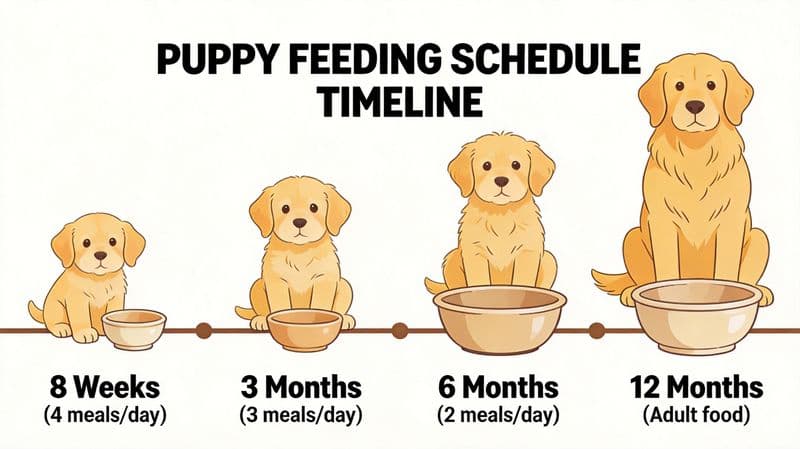
Puppy Feeding Schedule by Age
| Age | Meals per Day | Why |
|---|---|---|
| 6–12 weeks | 4 | Small stomach, high calorie need, blood sugar stability |
| 3–6 months | 3 | Stomach capacity increasing, still growing fast |
| 6–12 months | 2–3 | Transitioning toward adult feeding pattern |
| 12+ months | 2 | Adult feeding schedule (varies by breed size) |
Small breed note: Toy and small breed puppies are at risk for hypoglycemia (low blood sugar) if they go too long without eating. For puppies under 3 kg, 4 meals per day through 6 months is recommended.
How Many Calories Does a Puppy Need?
Puppy calorie needs are calculated differently from adult dogs. Instead of using fixed multipliers, veterinary nutritionists use growth-stage factors:
| Growth Stage | Multiplier vs. RER | Approximate Age |
|---|---|---|
| Early growth (fastest) | 3.0× RER | 6–16 weeks |
| Mid growth | 2.5× RER | 4–6 months |
| Late growth | 2.0× RER | 6–12 months |
| Near adult size | 1.6× RER | 12–18 months (large/giant) |
Example — A 5 kg, 4-month-old Labrador puppy:
- RER = 70 × 5^0.75 = 234 kcal
- Mid-growth multiplier = 2.5×
- Daily calories = 234 × 2.5 = 585 kcal
But this is a rough estimate. For exact numbers, use our calorie calculator with your puppy's specific details.
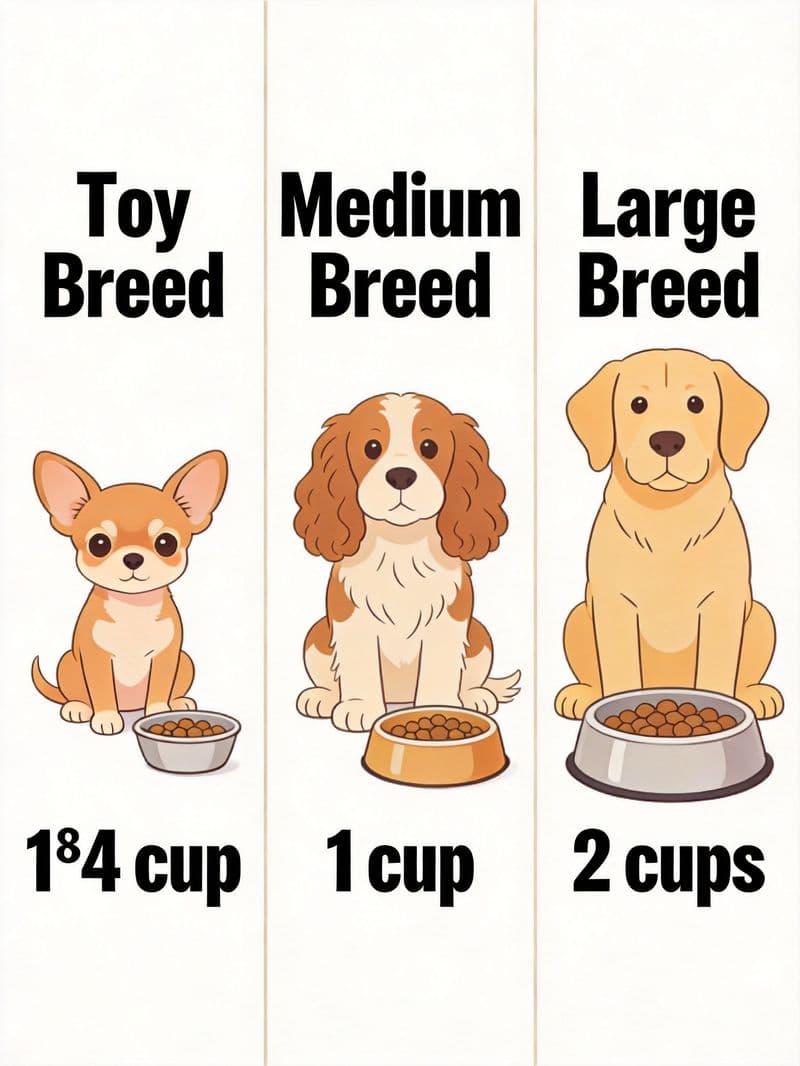
Breed Size Matters — A Lot
The most important factor in puppy nutrition is adult breed size, because it determines how long the growth period lasts and how carefully you need to control calorie intake.
Small Breeds (adult weight under 10 kg)
- Growth period: 9–12 months
- Metabolism: Fast — they burn through calories quickly
- Risk: Hypoglycemia if underfed
- Feed: Calorie-dense puppy food, frequent small meals
- Switch to adult food: 9–12 months
Medium Breeds (adult weight 10–25 kg)
- Growth period: 12 months
- Metabolism: Moderate
- Risk: General overfeeding
- Feed: Standard puppy food, 3 meals then 2
- Switch to adult food: 12 months
Large and Giant Breeds (adult weight 25+ kg)
- Growth period: 12–24 months
- Metabolism: Slower growth rate is HEALTHY
- Risk: Rapid growth causing joint damage — this is the big one
- Feed: Large-breed puppy formula (controlled calcium and phosphorus), strict portion control
- Switch to adult food: 12–24 months (breed-dependent)
For large and giant breeds, slower growth is better. A lean puppy will reach the same adult size — just a few months later — with significantly healthier joints. Never try to make a large breed puppy "big and sturdy" by overfeeding.
The Dangers of Overfeeding Puppies
Research from the Purina Life Span Study demonstrated that Labrador Retrievers fed 25% fewer calories than their free-fed littermates:
- Had significantly lower rates of hip dysplasia
- Developed osteoarthritis later in life
- Lived an average of nearly 2 years longer
The key insight: The fed-to-ideal-weight dogs were NOT underfed. They were fed the correct amount. The "normal" group was actually overfed.
Signs your puppy is growing too fast:
- Rounded, barrel-shaped appearance instead of a tucked waist
- Visible fat over the ribs
- Loose or "clunky" gait
- Reluctance to exercise
If you notice any of these, reduce portions by 10–15% and consult your vet.
When to Switch from Puppy to Adult Food
The transition isn't just about age — it's about physical maturity:
| Breed Size | When to Switch | Why |
|---|---|---|
| Small (under 10 kg) | 9–12 months | Growth complete, excess calories cause weight gain |
| Medium (10–25 kg) | 12 months | Skeleton fully formed |
| Large (25–45 kg) | 12–15 months | Growth plates closing |
| Giant (over 45 kg) | 15–24 months | Extended growth period, joints still developing |
Transition gradually over 7–10 days: Mix increasing amounts of adult food with decreasing amounts of puppy food to avoid digestive upset.
Practical Feeding Tips
- Use a kitchen scale. Measuring cups are inconsistent. A "cup" of kibble can vary by 20% depending on how tightly it's packed.
- Split daily calories across meals. This aids digestion and prevents blood sugar spikes.
- Stick to a schedule. Feed at the same times every day. Puppies thrive on routine.
- Limit treats to 10% of daily calories. A single training treat might be 5–10 kcal — it adds up fast with a small puppy.
- Adjust every 2 weeks. Puppies grow fast. Recalculate calories as weight changes.
- Monitor BCS monthly. Use our Body Condition Score assessment to track whether your puppy is growing at a healthy rate.
Quick Reference: Estimated Daily Calories for Puppies
| Current Puppy Weight | Small Breed | Medium Breed | Large/Giant Breed |
|---|---|---|---|
| 2 kg | 280 kcal | 260 kcal | 240 kcal |
| 5 kg | 585 kcal | 540 kcal | 470 kcal |
| 10 kg | — | 880 kcal | 790 kcal |
| 15 kg | — | 1,070 kcal | 960 kcal |
| 25 kg | — | — | 1,250 kcal |
These are estimates for moderately active puppies. Always calculate for your specific dog.
Next Steps
- Calculate your puppy's exact calorie needs — personalized for breed and age
- Get a complete feeding plan — with portion sizes for your food brand
- Check your puppy's body condition — make sure growth is on track
- Find your breed's ideal weight — see the adult target for your puppy's breed
Want Personalized Recommendations?
🐾 Every dog is different. Get breed-specific weight, feeding, and exercise recommendations tailored to your dog's age and size. → Browse 159 breed profiles on PawScale