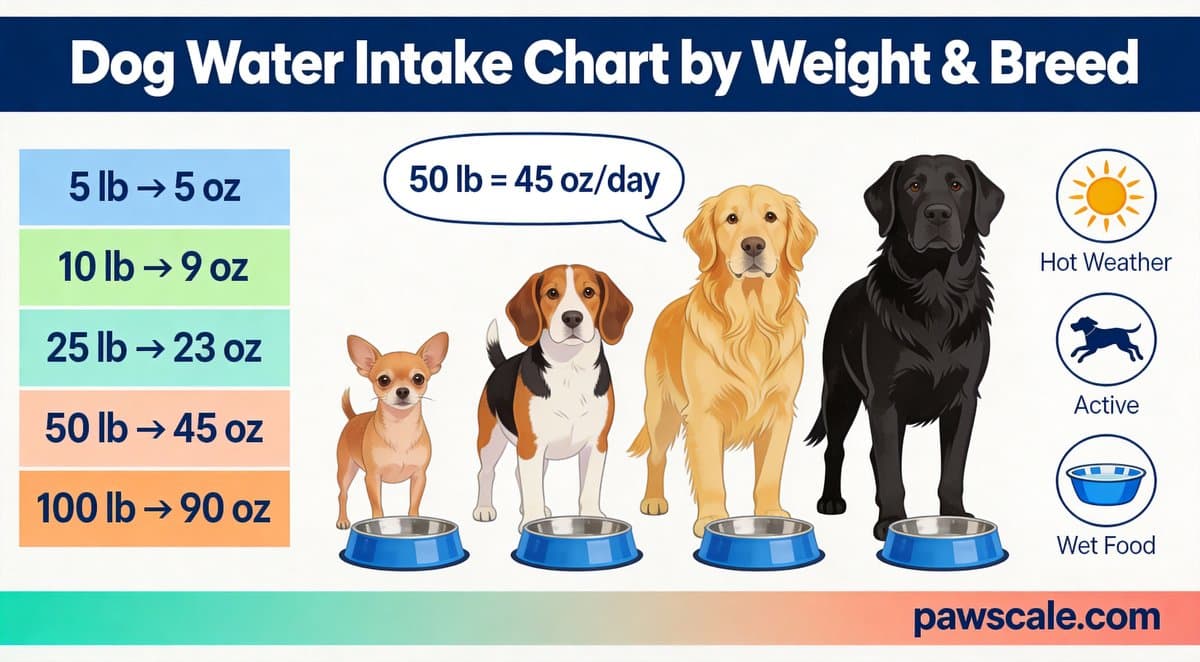
Dog Water Intake Chart by Weight & Breed
A 50-pound dog needs about 45 ounces (5.6 cups) of water per day — but that number changes dramatically based on breed, diet, and activity level. A tiny Chihuahua and a Great Dane don't just differ in how much they drink; the factors that affect their hydration are completely different.
This chart gives you exact numbers for your dog's weight, plus adjustments for hot weather, exercise, diet type, and life stage. All data is based on the National Research Council's Nutrient Requirements of Dogs and Cats (2006), which recommends 50–60 mL per kilogram of body weight per day as the baseline for healthy adult dogs.
Whether you're raising a new puppy, worrying about your senior dog's drinking habits, or just want a quick reference you can screenshot — you're in the right place.
💡 Want your dog's exact daily calorie needs? Use our free Calorie Calculator → to get precise numbers based on weight, age, and activity level. Water intake and calorie needs are closely linked — knowing both gives you a complete picture of your dog's daily nutrition.
Dog Water Intake Chart by Weight
This is the core reference table. Find your dog's weight in the left column, and you'll see exactly how much water they should drink each day under different conditions.
| Dog Weight | Daily Water (Normal) | Hot Weather / Active | Diet Adjustment (Wet Food) | Equivalent Bowl Size |
|---|---|---|---|---|
| 5 lbs (2.3 kg) | 5 oz / 150 mL | 8 oz / 240 mL | 2 oz / 60 mL | ¼ cup |
| 10 lbs (4.5 kg) | 9 oz / 270 mL | 15 oz / 450 mL | 4 oz / 120 mL | ½ cup |
| 20 lbs (9 kg) | 18 oz / 530 mL | 30 oz / 900 mL | 7 oz / 210 mL | 1 cup |
| 30 lbs (13.6 kg) | 27 oz / 800 mL | 45 oz / 1.3 L | 11 oz / 320 mL | 1.5 cups |
| 40 lbs (18 kg) | 36 oz / 1.1 L | 60 oz / 1.8 L | 14 oz / 420 mL | 2 cups |
| 50 lbs (22.7 kg) | 45 oz / 1.35 L | 75 oz / 2.25 L | 18 oz / 540 mL | 2.5 cups |
| 60 lbs (27 kg) | 54 oz / 1.6 L | 90 oz / 2.7 L | 22 oz / 650 mL | 3 cups |
| 75 lbs (34 kg) | 68 oz / 2.0 L | 115 oz / 3.4 L | 27 oz / 800 mL | 3.5 cups |
| 90 lbs (41 kg) | 81 oz / 2.4 L | 135 oz / 4.0 L | 32 oz / 950 mL | 4 cups |
| 100 lbs (45 kg) | 90 oz / 2.7 L | 150 oz / 4.5 L | 36 oz / 1.1 L | 4.5 cups |
How to read this table:
- Daily Water (Normal): Baseline intake for a dog eating dry kibble at comfortable room temperature with typical indoor activity.
- Hot Weather / Active: Adjusted amount for temperatures above 80°F (27°C), dogs that exercise heavily, or both. This reflects an increase to roughly 100+ mL per kg.
- Diet Adjustment (Wet Food): What a dog on a 100% wet food diet needs from the bowl. Since wet food is 70–80% moisture, most hydration comes from food. For mixed feeding (part kibble, part wet), subtract proportionally.
- Equivalent Bowl Size: A practical visual — how many cups per day, so you can check if your dog's bowl is being emptied at the right rate.
The formula behind these numbers is straightforward: 50–60 mL per kg of body weight (NRC, 2006). Hot weather and activity push this to 100+ mL/kg. The wet food adjustment subtracts approximately 60% because canned food contains 70–80% moisture by weight.
Water Intake Chart by Breed & Size Category
Weight is the primary driver of water intake — but breed matters too. A stocky Bulldog and a lean Border Collie may weigh the same, yet their hydration needs differ because of body composition, coat type, and energy expenditure.
Below, we've grouped popular breeds by size category so you can find your dog quickly. Use the weight ranges to get the most accurate number.
Toy Breeds (Under 12 lbs)
Tiny dogs have surprisingly high metabolic rates relative to their size, which means they often need more water per pound than large breeds. They also dehydrate faster, so consistency matters.
| Breed | Weight Range | Daily Water (Normal) | Daily Water (Active/Hot) |
|---|---|---|---|
| Chihuahua | 3–6 lbs | 3–6 oz | 5–10 oz |
| Pomeranian | 3–7 lbs | 3–7 oz | 5–12 oz |
| Yorkshire Terrier | 4–7 lbs | 4–7 oz | 7–12 oz |
| Maltese | 4–7 lbs | 4–7 oz | 7–12 oz |
| Toy Poodle | 4–6 lbs | 4–6 oz | 7–10 oz |
Because toy breeds drink in such small quantities, even a slight decrease can signal a problem. If your 5-pound Chihuahua isn't drinking at least 3 ounces per day, check for dental pain or illness. Check your Chihuahua's exact weight guide and calorie needs → for breed-specific nutrition data.
Small Breeds (12–25 lbs)
This group includes some of the most popular companion dogs worldwide. Many small breeds — especially brachycephalic (flat-faced) breeds like French Bulldogs and Pugs — can be picky drinkers.
| Breed | Weight Range | Daily Water (Normal) | Daily Water (Active/Hot) |
|---|---|---|---|
| French Bulldog | 16–28 lbs | 16–28 oz | 27–47 oz |
| Dachshund | 16–32 lbs | 16–32 oz | 27–53 oz |
| Cavalier King Charles | 13–18 lbs | 13–18 oz | 22–30 oz |
| Pug | 14–18 lbs | 14–18 oz | 23–30 oz |
| Boston Terrier | 12–25 lbs | 12–25 oz | 20–42 oz |
Brachycephalic breeds may struggle with traditional bowls. A tilted or elevated water dish can help. See the French Bulldog weight & calorie guide → for more on keeping your Frenchie healthy.
Medium Breeds (25–50 lbs)
Medium breeds cover a wide range of activity levels — from couch-potato Bulldogs to marathon-running Border Collies. Adjust water intake based on your individual dog's exercise, not just the breed average.
| Breed | Weight Range | Daily Water (Normal) | Daily Water (Active/Hot) |
|---|---|---|---|
| Beagle | 20–30 lbs | 20–30 oz | 33–50 oz |
| Border Collie | 30–55 lbs | 27–50 oz | 45–83 oz |
| Cocker Spaniel | 20–30 lbs | 20–30 oz | 33–50 oz |
| Australian Shepherd | 40–65 lbs | 36–59 oz | 60–98 oz |
| Bulldog | 40–50 lbs | 36–45 oz | 60–75 oz |
Working and herding breeds like the Border Collie and Australian Shepherd sit at the higher end when they're active. Check your Beagle's weight & calorie guide → to make sure your pup is getting the right balance of food and water.
Large Breeds (50–90 lbs)
Large dogs need substantial daily water — often over a gallon in hot weather. They're also more prone to bloat (GDV), so encourage frequent small drinks rather than letting them gulp an entire bowl at once.
| Breed | Weight Range | Daily Water (Normal) | Daily Water (Active/Hot) |
|---|---|---|---|
| Labrador Retriever | 55–80 lbs | 50–72 oz | 83–120 oz |
| Golden Retriever | 55–75 lbs | 50–68 oz | 83–113 oz |
| German Shepherd | 50–90 lbs | 45–81 oz | 75–135 oz |
| Husky | 35–60 lbs | 32–54 oz | 53–90 oz |
| Boxer | 50–80 lbs | 45–72 oz | 75–120 oz |
Labs and Goldens are notorious for drinking (and eating) everything in sight. If your Labrador seems to drink far more than the numbers above, it's worth checking with your vet. See the Golden Retriever weight & calorie guide → for complete nutrition benchmarks.
Giant Breeds (90+ lbs)
Giant breeds can drink 3–4 liters or more per day. Make sure fresh water is always accessible — a single large bowl may not be enough.
| Breed | Weight Range | Daily Water (Normal) | Daily Water (Active/Hot) |
|---|---|---|---|
| Great Dane | 110–175 lbs | 100–158 oz | 165–263 oz |
| Mastiff | 120–230 lbs | 108–207 oz | 180–345 oz |
| Saint Bernard | 120–180 lbs | 108–162 oz | 180–270 oz |
| Newfoundland | 100–150 lbs | 90–135 oz | 150–225 oz |
| Kangal | 90–150 lbs | 81–135 oz | 135–225 oz |
Great Danes and Mastiffs are especially prone to bloat. Never let them gulp large amounts of water at once — offer small, frequent drinks instead. See the Kangal weight & calorie guide → for more on giant breed nutrition.
📊 Check your breed's complete weight & nutrition profile → Browse PawScale's breed guides for detailed weight ranges, health risks, and calorie needs for 150+ breeds.
Water Intake Adjustment by Diet Type
What your dog eats has a massive impact on how much they need to drink. Here's why:
| Diet Type | Moisture Content | Water from Bowl | Adjustment |
|---|---|---|---|
| Dry kibble | ~10% | 100% of daily need | Use chart as-is |
| Wet/canned food | 70–80% | ~40% of daily need | Reduce bowl water by ~60% |
| Raw diet (BARF) | 60–70% | ~50% of daily need | Reduce bowl water by ~50% |
| Mixed feeding | Varies | Proportional adjustment | See below |
Here's a real-world example: A 50 lb dog eating 3 cans of wet food (12 oz each) gets approximately 900 mL of water from food alone. They may drink only a few ounces from the bowl. This is completely healthy. The "Diet Adjustment" column in the main chart shows what they'd need from the bowl on a 100% wet food diet — for mixed feeding, subtract proportionally.
Activity Level
A sedentary apartment dog and a hiking companion need very different amounts of water.
- Sedentary adult: Baseline 50–60 mL/kg — the numbers in the chart.
- Moderate activity (30-min walk daily): Increase by about 15%.
- High activity (2-hour hike, agility, running): Up to 2× baseline.
- Working dogs (herding, sledding, field work): 80–100+ mL/kg.
Always carry water on outings. A dehydrated working dog is an unsafe working dog.
Weather & Temperature
Heat is the fastest way to spike water needs:
- Above 80°F (27°C): Increase water by 50%.
- Above 90°F (32°C): Increase by 100% — your dog may need double the baseline.
The "Hot Weather / Active" column in the main chart accounts for this. In extreme heat, consider bringing water on every outing and offering it frequently.
Age & Life Stage
- Puppies: Need roughly 2× more water per kg than adults. They burn energy fast and have small bladders, so they take frequent small drinks. Always keep fresh water accessible.
- Senior dogs: May drink less due to reduced thirst drive — which makes them more vulnerable to dehydration. Monitor closely and consider adding water to their food.
- Nursing mothers: Require 2–3× baseline. Milk is mostly water. A nursing Labrador can easily drink a gallon or more per day.
Health Conditions
Certain conditions directly affect water intake:
- Increased thirst (>100 mL/kg/day): Can signal diabetes, kidney disease, or Cushing's disease. If your dog is drinking significantly more than the chart suggests with no obvious reason, schedule a vet visit.
- Decreased thirst: May indicate nausea, dental pain, or systemic illness. A dog that stops drinking is a dog that needs attention — especially in warm weather.
How to Check if Your Dog Is Dehydrated
You don't need special equipment. Here are three tests you can do right now:
1. Skin Tent Test Pinch the skin between your dog's shoulder blades, lift it up, then release. A well-hydrated dog's skin snaps back in under 1 second. If the skin stays "tented" for 2 or more seconds, your dog is approximately 5–7% dehydrated and needs water immediately.
2. Gum Check Lift your dog's lip and touch their gums with your fingertip. Healthy gums feel moist and slippery — like the inside of your cheek. Dehydrated gums feel dry, tacky, or sticky. If the gums are pale or blue, that's an emergency.
3. Capillary Refill Time Press your finger against your dog's gum until the spot turns white, then release. The color should return in under 2 seconds. If it takes longer, your dog may be dehydrated or in shock.
If any of these tests show dehydration, offer fresh water immediately and contact your vet — especially if symptoms don't improve within 30 minutes.
Recommended: Veken 95oz Pet Fountain — Ultra-quiet 3-stage filtration. Circulating fresh water encourages drinking. Great for dogs that don't drink enough from a still bowl.
How to Encourage Your Dog to Drink More Water
Some dogs just don't drink enough on their own. Here are seven proven ways to boost their intake:
- Use a pet water fountain. Moving water attracts dogs instinctively. Many dogs that ignore a still bowl will drink eagerly from a circulating fountain.
- Place multiple bowls around the house. One bowl per floor makes it easy for your dog to hydrate without a trip. Especially important for senior dogs with limited mobility.
- Use a wider, shallow bowl. Some dogs hate their whiskers touching the sides of a deep, narrow bowl. A wide shallow stainless steel bowl solves this.
- Add water or low-sodium bone broth to kibble. Pouring 2–4 ounces of warm water or unsalted broth over dry food adds hidden hydration with every meal.
- Offer ice cubes as treats. Especially in summer — many dogs love crunching ice, and it's a safe way to add fluid.
- Switch 25% of kibble to wet food. Even a partial swap significantly increases moisture intake without a full diet change.
- Bring a collapsible bowl on walks. A dog that exercises for 30+ minutes needs water on the go.
Recommended: Collapsible Portable Dog Water Bowl — Lightweight, clips to your belt or backpack. Essential for hikes and summer outings.
When to See a Vet
Most day-to-day variation in water intake is normal. But these signs warrant a vet visit:
- Drinking significantly more or less than normal for 2+ consecutive days — especially without a change in weather, diet, or activity.
- Excessive thirst + excessive urination — the classic warning sign of diabetes, kidney disease, or Cushing's disease.
- Dehydration signs that don't improve after offering water — skin tenting, dry gums, or sunken eyes.
- Lethargy combined with not drinking — this is an emergency, especially in hot weather or for puppies and senior dogs.
When in doubt, a simple urinalysis at the vet can rule out the most common causes. It's always better to check early.
🐕 Not sure if your dog is at a healthy weight? Take our free 2-minute BCS Assessment → — 4 questions, no account needed. Knowing your dog's ideal weight helps you set accurate water and calorie targets.
Find Your Dog's Exact Hydration & Nutrition Needs
Water intake depends on your dog's ideal weight, activity level, and diet. If you're not sure how much your dog should weigh — or how many calories they need — our free tools can help:
- BCS Assessment — Check if your dog is at a healthy weight in just 4 questions.
- Calorie Calculator — Get exact daily calorie needs based on weight, age, and activity level.
- Feeding Plan Generator — Turn calories into exact food amounts and meal schedules.
- Weight Tracker — Monitor your dog's weight over time with visual progress charts.
All tools are free, require no account, and take under 2 minutes.
Related Reading
- Dog Crate Size Chart by Breed — Find the perfect crate size for any breed, with measurements and real-world fit photos.
Frequently Asked Questions
How much water should a 50-pound dog drink per day?
A 50-pound (22.7 kg) dog should drink approximately 45 ounces (1.35 liters) of water per day under normal conditions. This is based on the NRC guideline of 50–60 mL per kg body weight. In hot weather or with high activity, this can increase to 75 ounces (2.25 liters) or more.
How do I know if my dog is drinking too much water?
Drinking more than 100 mL per kg of body weight per day consistently (about 1 ounce per pound) may indicate a health problem. Excessive thirst combined with excessive urination is a classic sign of diabetes, kidney disease, or Cushing's disease. If your dog's water consumption suddenly increases without a clear reason (hot weather, more exercise), schedule a vet visit for a urinalysis.
Does my dog need to drink water if they eat wet food?
Yes, but significantly less from the bowl. Wet food contains 70–80% moisture, so a 50 lb dog eating 3 cans of wet food (12 oz each) gets about 900 mL of water from food alone. They may drink only a few ounces from the bowl. This is completely healthy. Dogs on dry kibble (10% moisture) need to drink much more from the bowl.
How can I tell if my dog is dehydrated?
Three quick tests: (1) Skin tent test — pinch skin between shoulder blades; if it doesn't snap back within 2 seconds, your dog is dehydrated. (2) Gum check — lift the lip; dry, tacky gums indicate dehydration. (3) Capillary refill — press the gum with your finger; color should return in under 2 seconds. If any test is abnormal, offer water immediately and contact your vet.
Should I be worried if my dog isn't drinking water?
It depends on their diet. Dogs eating wet or raw food get 70%+ of their moisture from food and may drink very little from the bowl — this is normal. However, a kibble-fed dog that hasn't drunk water for 24+ hours needs a vet check. Dehydration becomes dangerous within 24 hours, especially in hot weather.
Data Sources
- National Research Council. Nutrient Requirements of Dogs and Cats. 2006.
- Merck Veterinary Manual — Dehydration assessment and polydipsia guidelines.
- Association for Pet Obesity Prevention (APOP) — Weight and health statistics.
- AKC Breed Standards — Breed weight ranges.