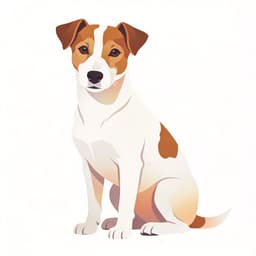
Russell Terrier Weight & Calorie Guide
Quick Answer
A healthy adult Russell Terrier weighs 4–7 kg (8.8–15.4 lbs), according to the AKC breed standard. Puppies reach 50% of adult weight by 4–5 months and full weight by 9–10 months.
Source: AKC breed standard, WSAVA nutrition guidelines
Quick Facts
Ideal Weight Range
Puppy Weight Predictor
For puppies under 12 months. Enter your puppy's current weight and age to predict adult weight.
How the puppy weight predictor works
This predictor uses growth milestone data from Salt et al. (2017), published in Veterinary Record, which tracked the weight development of dogs across five size categories from birth to adulthood. By comparing your puppy's current weight against the expected growth percentage for their age and size category, we estimate their adult weight range.
Factors that affect adult weight
Genetics play the largest role, but nutrition, neutering status, and overall health also influence growth rate. Puppies fed excessive calories during rapid growth phases may exceed their genetic weight potential, while underfed puppies may not reach it. Large and giant breeds grow more slowly than toy and small breeds, reaching full size at 18–24 months rather than 10–12 months.
Data source: Salt et al. (2017) "Growth patterns of commercial kennel dogs" Veterinary Record • AKC breed standards
Russell Terrier Health & Weight Management
Russell Terriers are compact, fearless hunting terriers with seemingly inexhaustible energy. Bred to bolt foxes from underground dens, they possess a powerful prey drive, remarkable agility, and a determination that belies their small size. Without adequate physical and mental outlets, Russell Terriers become destructive — digging, excessive barking, and escaping are common complaints from under-exercised dogs. Patellar luxation, primary lens luxation (PLL), and Legg-Calvé-Perthes disease are breed-specific health concerns.
Exercise: Russell Terriers need 45–60+ minutes of vigorous daily exercise — brisk walks, running, earth dog trials, agility, or structured play. A short walk is not enough. Their terrier intelligence demands mental stimulation: puzzle toys, scent work, and training sessions prevent boredom-driven destruction.
Feeding tips: Despite their small size, Russell Terriers burn significant calories due to their high energy. Feed measured portions of quality kibble twice daily. Limit treats to no more than 10% of daily calories. Avoid free-feeding — these dogs will eat opportunistically if given the chance.
Keeping your Russell Terrier at an ideal weight of 9–15 lbs (4–7 kg) is essential for joint health — every extra pound increases stress on knees already at risk for patellar luxation. Use PawScale's calorie calculator to dial in daily nutrition, check body condition with our BCS assessment, and build a custom meal plan with the feeding guide.
Russell Terrier vs Similar Terrier Breeds
| Breed | Weight | Height | Energy | Best For | |-------|--------|--------|--------|----------| | Russell Terrier | 4–7 kg | 25–30 cm | Very High | Active owners, earth dog sports | | Jack Russell Terrier | 5–8 kg | 25–30 cm | Very High | Active families, working terrier | | Border Terrier | 5–7 kg | 33–41 cm | High | Families, hiking companions | | Cairn Terrier | 6–8 kg | 25–28 cm | Moderate–High | Apartments, families |
Russell Terrier Weight by Age
| Age | Weight | |-----|--------| | 8 weeks | 1.1–2.3 kg | | 3 months | 1.8–3.2 kg | | 6 months | 3.4–5.7 kg | | 9 months | 4.3–6.8 kg | | 12 months (adult) | 4–7 kg |
Note: Russell Terriers are a small breed with no significant male/female weight difference. Data source: AKC breed standard, Russell Terrier Club of America, dogweightcalculator.com
Data source: AKC breed standard, Russell Terrier Club of America (RTCA) • Last updated: 2026-09-17
Is your Russell Terrier at a healthy weight?
59% of dogs are overweight — can you tell? Take our free 2-minute Body Condition Score assessment.
Russell Terrier Calorie Calculator
Calculate daily calorie needs in 3 steps
Weight Management Tips for Russell Terrier
Breed-specific guidance backed by veterinary research
Ideal Weight Range
4–7 kg (9–15 lbs). Both sexes share the same range per the AKC breed standard. The Russell Terrier is a compact, rectangular hunting terrier — excess weight compromises agility and stresses joints.
Source: AKC Breed Standard, RTCAObesity Risk
Russell Terriers are high-energy terriers that rarely become obese in working conditions — but pet dogs with insufficient exercise can gain excess weight. Their compact frame means even 1–2 lbs extra places significant strain on joints already at risk for patellar luxation.
Source: AKC breed standard; RTCA health guidelinesDaily Caloric Needs
| Weight | RER | Neutered Adult (×1.4) | Active Adult (×1.6) |
|---|---|---|---|
| 9 lbs (4 kg) | 230 kcal | 322 kcal | 368 kcal |
| 12 lbs (5.5 kg) | 289 kcal | 405 kcal | 462 kcal |
| 15 lbs (7 kg) | 347 kcal | 486 kcal | 555 kcal |
Use our [dog calorie calculator](/calorie) for your Russell Terrier’s exact target.
Formula: AAHA 2021 GuidelinesExercise Requirements
- Adult: Minimum 45–60 minutes daily of vigorous activity — brisk walks, running, earth dog trials, or agility.
- Senior: 20–30 minutes, split into 2 gentle sessions. Monitor for signs of patellar luxation.
Breed-Specific Weight Management Tips
- Measure food precisely — on a 4 kg dog, even 1 tablespoon of extra kibble adds 5–8% to daily calories.
- Use puzzle feeders — Russell Terriers are intelligent and need mental challenges during meals.
- Secure fencing is essential — these dogs are expert escape artists and will chase prey through any gap.
- Replace high-calorie treats with carrot sticks or green beans — their small size means treats add up fast.
- DNA test breeding stock for PLL (primary lens luxation) and late-onset ataxia.
Health Risks of Obesity
- Patellar luxation: Common in small terriers; excess weight worsens knee instability
- Primary lens luxation (PLL): DNA-testable hereditary condition causing blindness
- Legg-Calvé-Perthes disease: Degeneration of the hip joint; obesity accelerates onset
- Deafness: Increased rate in dogs with extensive white markings
BCS Quick Check
Russell Terriers’ compact, muscular build makes weight gain visible relatively early. Run hands along the ribcage monthly. Use our [BCS chart](/bcs) for visual guides.
Male vs Female Russell Terrier: Size Difference
Male and female Russell Terriers differ noticeably in size. Males are typically heavier and taller at the shoulder.
| Metric | Male | Female |
|---|---|---|
| Weight | 4–7 kg (9–15 lbs) | 4–7 kg (9–15 lbs) |
| Height at Shoulder | 25–30 cm (10–12 in) | 25–30 cm (10–12 in) |
| Ideal BCS | 4–5/9 | 4–5/9 |
Data based on AKC breed standard.
Frequently Asked Questions
How much should a Russell Terrier weigh?
The ideal weight for a Russell Terrier is 4–7 kg (8.8–15.4 lbs). Even a small weight gain can be significant for smaller breeds. Use our calorie calculator above to get personalized feeding recommendations.
How many calories does a Russell Terrier need per day?
A typical adult Russell Terrier weighing 6 kg needs approximately 402–503 kcal per day, depending on activity level and whether they are neutered. Use our breed-specific calculator above for an exact number based on your dog's details.
Is my Russell Terrier overweight?
59% of dogs are overweight, and most owners cannot tell just by looking. Check your Russell Terrier's Body Condition Score (BCS) — if you can't easily feel their ribs or they have no visible waist from above, they may be overweight. Take our free 2-minute BCS assessment above to find out.
When does a Russell Terrier reach full adult weight?
Russell Terrier puppies reach 50% of their adult weight by 4–5 months and typically reach full adult weight by 9–10 months, according to AKC growth guidelines. Small breeds mature faster than large breeds.
What size crate does a Russell Terrier need?
A Russell Terrier typically needs a 24-inch crate based on breed size. Use PawScale's free crate size calculator for a personalized recommendation.
How much should a 6-month-old Russell Terrier weigh?
A 6-month-old Russell Terrier typically weighs 3.4–5.7 kg (7.5–12.5 lbs). Track growth with our puppy weight chart.
Are Russell Terriers good apartment dogs?
Russell Terriers are generally not ideal for apartments — they are high-energy terriers with a strong prey drive and need 45–60+ minutes of vigorous exercise daily.
How many calories does a Russell Terrier need?
A pet Russell Terrier with moderate activity needs ~320–490 kcal/day. Use our calorie calculator for an exact figure.
References & data sources
1. AKC Official Breed Standard — Russell Terrier. akc.org
2. Salt C, et al. “Estimating the expected growth of dogs.” Vet Record, 2017;180(15):376.
3. National Research Council. Nutrient Requirements of Dogs and Cats. National Academies Press, 2006.
4. Laflamme DP. “Development and validation of a body condition score system for dogs.” Canine Practice, 1997;22(4):10–15.
5. WSAVA Global Nutrition Guidelines; Association for Pet Obesity Prevention (APOP) 9-point BCS scale.
Last reviewed: September 2026
Know Your Russell Terrier's Exact Calorie Needs
Calculate the perfect daily calories for your Russell Terrier based on their weight, age, and activity level. Prevent obesity with science-backed nutrition guidance.
Calculate Calories NowFree · Breed-specific · Takes 30 seconds

Recommended for Your Russell Terrier
Tools to help manage your Russell Terrier's weight and feeding
Digital Pet Scale (up to 22 lbs)
Hold your small dog on the scale — tare function for accurate reading
View on Amazon →
Outward Hound Fun Feeder Slo Bowl (Medium)
Maze design slows eating, BPA-free, dishwasher safe
View on Amazon →
Zuke's Mini Naturals Low-Cal Treats
Only 2 calories per treat — perfect for weight-conscious training
View on Amazon →
KONG Wobbler (Small)
Action-packed food dispenser for mental stimulation
View on Amazon →
As an Amazon Associate, we earn from qualifying purchases.