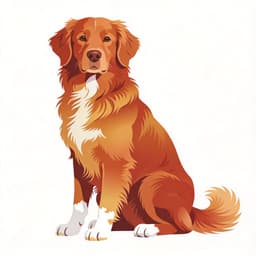
Nova Scotia Duck Tolling Retriever Weight & Calorie Guide
Quick Answer
A healthy adult Nova Scotia Duck Tolling Retriever weighs 16–23 kg (35.3–50.7 lbs), according to the AKC breed standard. Puppies reach 50% of adult weight by 5–6 months and full weight by 12–14 months.
Source: AKC breed standard, WSAVA nutrition guidelines
Quick Facts
Ideal Weight Range
Puppy Weight Predictor
For puppies under 12 months. Enter your puppy's current weight and age to predict adult weight.
How the puppy weight predictor works
This predictor uses growth milestone data from Salt et al. (2017), published in Veterinary Record, which tracked the weight development of dogs across five size categories from birth to adulthood. By comparing your puppy's current weight against the expected growth percentage for their age and size category, we estimate their adult weight range.
Factors that affect adult weight
Genetics play the largest role, but nutrition, neutering status, and overall health also influence growth rate. Puppies fed excessive calories during rapid growth phases may exceed their genetic weight potential, while underfed puppies may not reach it. Large and giant breeds grow more slowly than toy and small breeds, reaching full size at 18–24 months rather than 10–12 months.
Data source: Salt et al. (2017) "Growth patterns of commercial kennel dogs" Veterinary Record • AKC breed standards
Nova Scotia Duck Tolling Retriever Health & Weight Management
Nova Scotia Duck Tolling Retrievers are the smallest of the retriever breeds, developed in Canada to lure waterfowl within gunshot range by playing along the shoreline — a unique hunting technique called "tolling." Despite their compact size, Tollers are powerful, athletic dogs with enormous endurance and an intense retrieving drive. They are highly intelligent and eager to please, but their high-arousal personality means they need both vigorous physical exercise and consistent mental challenges. Without adequate outlets, Tollers develop demand barking, overexcitement, and destructive chewing. Addison's disease, autoimmune thyroiditis, hip dysplasia, and progressive retinal atrophy (PRA) are breed-specific health concerns.
Exercise: Tollers need 60–120 minutes of vigorous daily exercise — swimming, retrieving games, agility, scent work, or running. They are natural water dogs with exceptional cold tolerance. Mental stimulation is equally important: puzzle toys, advanced training, and field work keep this breed balanced and calm at home.
Feeding tips: Active Tollers in field work may need 1,000–1,400 kcal daily. On rest days, reduce portions to prevent weight gain. Choose a high-protein formula (22–25% protein). Feed 2 measured meals daily rather than one large meal. Avoid feeding immediately before swimming or intense exercise.
Keeping your Toller at an ideal weight of 35–50 lbs (16–23 kg) is essential for joint health and longevity — especially important given the breed's predisposition to autoimmune conditions. Use PawScale's calorie calculator to dial in daily nutrition, check body condition with our BCS assessment, and build a custom meal plan with the feeding guide.
Nova Scotia Duck Tolling Retriever vs Similar Retrievers
| Breed | Weight | Height | Energy | Best For | |-------|--------|--------|--------|----------| | Nova Scotia Duck Tolling Retriever | 16–23 kg | 43–53 cm | Very High | Active families, field work | | Labrador Retriever | 25–36 kg | 55–62 cm | High | Families, hunting | | Golden Retriever | 25–34 kg | 51–61 cm | Moderate–High | Families, therapy work | | Cocker Spaniel | 9–14 kg | 36–43 cm | Moderate–High | Families, apartments |
Nova Scotia Duck Tolling Retriever Weight by Age
| Age | Male Weight | Female Weight | |-----|------------|--------------| | 8 weeks | 2.3–4.5 kg | 2–4 kg | | 3 months | 4–7 kg | 3.5–6 kg | | 6 months | 9–14 kg | 8–12 kg | | 9 months | 13–18 kg | 11–16 kg | | 12 months | 16–21 kg | 14–18 kg | | 18 months (adult) | 18–23 kg | 16–20 kg |
Data source: AKC breed standard, NSDTRC (USA), furrycritter.com, breedtools.com
Data source: AKC breed standard, Nova Scotia Duck Tolling Retriever Club (USA) • Last updated: 2026-09-17
Is your Nova Scotia Duck Tolling Retriever at a healthy weight?
59% of dogs are overweight — can you tell? Take our free 2-minute Body Condition Score assessment.
Nova Scotia Duck Tolling Retriever Calorie Calculator
Calculate daily calorie needs in 3 steps
Weight Management Tips for Nova Scotia Duck Tolling Retriever
Breed-specific guidance backed by veterinary research
Ideal Weight Range
Males: 16–23 kg (35–50 lbs); Females: 16–20 kg (35–45 lbs). Per the AKC breed standard, Tollers are the smallest retriever — compact, athletic, and built for agility and endurance.
Source: AKC Breed Standard, NSDTRC (USA)Obesity Risk
Tollers are high-energy sporting dogs — but pet Tollers with reduced activity gain weight readily. The breed’s genetic predisposition to autoimmune thyroiditis directly impacts metabolism and weight management.
Source: AKC breed standard; NSDTRC (USA) health guidelinesDaily Caloric Needs
| Weight | RER | Neutered Adult (×1.4) | Active Adult (×1.6) |
|---|---|---|---|
| 35 lbs (16 kg) | 555 kcal | 777 kcal | 888 kcal |
| 44 lbs (20 kg) | 656 kcal | 918 kcal | 1,050 kcal |
| 50 lbs (23 kg) | 720 kcal | 1,008 kcal | 1,152 kcal |
Use our [dog calorie calculator](/calorie) for your Toller’s exact target.
Formula: AAHA 2021 GuidelinesExercise Requirements
- Adult: Minimum 60–120 minutes daily — swimming, retrieving games, agility, or field work.
- Senior: 30–45 minutes, split into 2 sessions. Prioritize swimming for low-impact joint care.
Breed-Specific Weight Management Tips
- Adjust calories by activity level — a field-working Toller and a couch-potato pet have vastly different needs.
- Feed 2 measured meals daily; avoid free-feeding. Tollers are food-motivated retrievers.
- Check ears after swimming — Tollers’ drop ears are prone to moisture-related infections.
- Screen for Addison’s disease and autoimmune thyroiditis annually from age 3 — both affect metabolism.
- Use medium-breed puppy food for controlled growth — avoid overfeeding puppies to protect developing joints.
Health Risks of Obesity
- Addison’s disease (hypoadrenocorticism): 10x more likely in Tollers; affects stress response and metabolism
- Autoimmune thyroiditis: Immune system attacks thyroid gland, causing hypothyroidism and weight gain
- Hip dysplasia: Moderate prevalence; excess weight accelerates joint degeneration
- Progressive retinal atrophy (PRA): Hereditary progressive vision loss; DNA testing available
BCS Quick Check
Tollers’ medium-length double coat can hide moderate weight gain. Monthly rib palpation is essential. Use our [BCS chart](/bcs) for visual guides.
Male vs Female Nova Scotia Duck Tolling Retriever: Size Difference
Male and female Nova Scotia Duck Tolling Retrievers differ noticeably in size. Males are typically heavier and taller at the shoulder.
| Metric | Male | Female |
|---|---|---|
| Weight | 16–23 kg (35–50 lbs) | 16–20 kg (35–45 lbs) |
| Height at Shoulder | 46–53 cm (18–21 in) | 43–51 cm (17–20 in) |
| Ideal BCS | 4–5/9 | 4–5/9 |
Data based on AKC breed standard, NSDTRC (USA).
Frequently Asked Questions
How much should a Nova Scotia Duck Tolling Retriever weigh?
The ideal weight for a Nova Scotia Duck Tolling Retriever is 16–23 kg (35.3–50.7 lbs). Weight can vary based on gender, age, and individual build. Use our calorie calculator above to get personalized feeding recommendations.
How many calories does a Nova Scotia Duck Tolling Retriever need per day?
A typical adult Nova Scotia Duck Tolling Retriever weighing 20 kg needs approximately 1039–1299 kcal per day, depending on activity level and whether they are neutered. Use our breed-specific calculator above for an exact number based on your dog's details.
Is my Nova Scotia Duck Tolling Retriever overweight?
59% of dogs are overweight, and most owners cannot tell just by looking. Check your Nova Scotia Duck Tolling Retriever's Body Condition Score (BCS) — if you can't easily feel their ribs or they have no visible waist from above, they may be overweight. Take our free 2-minute BCS assessment above to find out.
When does a Nova Scotia Duck Tolling Retriever reach full adult weight?
Nova Scotia Duck Tolling Retriever puppies reach 50% of their adult weight by 5–6 months and typically reach full adult weight by 12–14 months, according to AKC growth guidelines. Small breeds mature faster than large breeds.
What size crate does a Nova Scotia Duck Tolling Retriever need?
A Nova Scotia Duck Tolling Retriever typically needs a 36-inch crate based on breed size. Use PawScale's free crate size calculator for a personalized recommendation.
How much should a 6-month-old Toller weigh?
A 6-month-old male Toller typically weighs 9–14 kg (20–31 lbs), while females weigh 8–12 kg (18–26 lbs). Track growth with our puppy weight chart.
What is Addison’s disease in Tollers?
Addison’s disease involves insufficient hormone production by the adrenal glands. Tollers are 10x more likely to develop it. It is manageable with lifelong hormone replacement.
How many calories does a Toller need?
A pet Toller with moderate activity needs ~780–1,010 kcal/day. A field-working dog may need 1,200–1,400+ kcal. Use our calorie calculator.
Are Tollers good family dogs?
Yes — Tollers are affectionate, playful, and excellent with children. They need 60–120 minutes of daily exercise.
References & data sources
1. AKC Official Breed Standard — Nova Scotia Duck Tolling Retriever. akc.org
2. Salt C, et al. “Estimating the expected growth of dogs.” Vet Record, 2017;180(15):376.
3. National Research Council. Nutrient Requirements of Dogs and Cats. National Academies Press, 2006.
4. Laflamme DP. “Development and validation of a body condition score system for dogs.” Canine Practice, 1997;22(4):10–15.
5. WSAVA Global Nutrition Guidelines; Association for Pet Obesity Prevention (APOP) 9-point BCS scale.
Last reviewed: September 2026
Know Your Nova Scotia Duck Tolling Retriever's Exact Calorie Needs
Calculate the perfect daily calories for your Nova Scotia Duck Tolling Retriever based on their weight, age, and activity level. Prevent obesity with science-backed nutrition guidance.
Calculate Calories NowFree · Breed-specific · Takes 30 seconds

Recommended for Your Nova Scotia Duck Tolling Retriever
Tools to help manage your Nova Scotia Duck Tolling Retriever's weight and feeding
Digital Pet Scale (up to 66 lbs)
Large platform fits medium breeds — accurate to 0.02 lb
View on Amazon →
Outward Hound Fun Feeder Slo Bowl (Large)
4-cup capacity, deep maze for medium dogs
View on Amazon →
Zuke's Mini Naturals Low-Cal Treats
Only 2 calories per treat — ideal for weight management
View on Amazon →
Nina Ottosson Dog Brick Puzzle (Level 2)
Sliding blocks & bone pegs — intermediate challenge for smart breeds
View on Amazon →
As an Amazon Associate, we earn from qualifying purchases.